

Vision 2030
赛得利2030愿景: 双重转型,共创可持续未来
2025年,赛得利对2030愿景进行了战略性升级。我们聚焦三个维度——深化目标、强化路径、确保可验证成果——致力于引领行业迈向”双重转型”:在将负面环境外部性降至趋近于零的同时,积极创造气候、生物多样性和社会福祉方面的增量价值。四大战略支柱,十七项量化承诺,指引我们迈向净零排放、闭环生产、创新循环与包容性成长的未来。

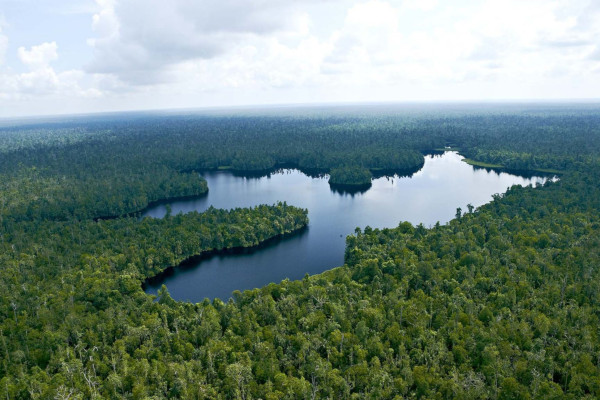


气候和生态系统保护
赛得利将气候与生态问题纳入战略规划和核心管理,聚焦资源效率、全生命周期减排和绿色供应链协同,建立可量化的行动路径。我们的承诺:
- 到2030年,以2023年为基准年,减少温室气体排放范围1、2强度达30%
- 赛得利承诺于2050年实现温室气体净零排放
- 到2030年,在其运营和供应链范围内支持陆地和淡水生态系统的保护、修复与再生:
- 将鄱阳湖淡水与湿地生态系统中的保护区域扩大4,000公顷以上
- 开展生物多样性教育与公众参与项目,使至少100万人受益
- 100%使用经PEFC™或FSC®认证的木浆原材料
... more
闭环清洁生产
赛得利秉持”闭环生产”理念,致力于引领再生纤维素纤维行业实现净正影响。通过强化环境管理体系、系统降低能耗和污染物排放、提高水能资源利用效率,构建可复制、可验证的绿色制造模式。我们的承诺:
所有纤维素纤维工厂应当建立清洁闭环的生产体系,并实现:
- 2023年通过EU-BAT标准审核
- 2023年达到ZDHC MMCF Guidelines良好等级
- 2027年前达到ZDHC MMCF Guidelines最佳等级
- 2025年达成全硫回收率高于98%
- 2025年实现零废弃物填埋
- 2030年,进一步降低水耗强度,使其低于EU-BAT水平
... more
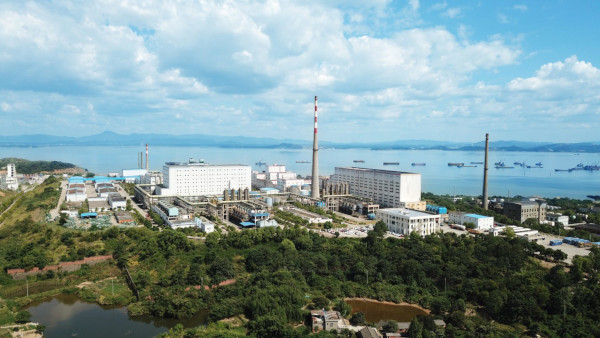





创新与循环
赛得利坚持创新和循环理念,致力于推动全产业链绿色升级。我们紧密对接客户需求,持续驱动技术创新,提供高性能、可追溯、环保型产品,构建更具韧性和负责任的循环经济生态。我们的承诺:
- 2023年,利用废旧纺织品生产出循环再生材料含量达50%的产品
- 2030年,这一比例提升至100%
- 2030年,在技术可行、市场供应充足且经济可行的前提下,提高含有替代或循环再生材料的原材料占比至20%
... more
包容性成长
赛得利将可持续发展视为企业与社会共同演进的长期命题。我们构建涵盖治理、人才、组织架构和社会影响力的包容性发展框架,致力于将企业成长动能转化为对员工成长、产业协同和社会福祉的持续赋能。我们的承诺:
- 直到2030年间乃至长期以后,实现0事故以及0职业病
- 到2025年及以后,工伤损工工时率降至低于0.1每200,000工时
- 到2030年,管理层中女性比例提高到至少20%
- 到2025年及以后,确保100%的助理经理及以上级别员工拥有定制的职业发展计划
- 到2030年及以后,实现尊重所有人的人权和劳动权利,并努力确保供应商也尊重这些权利,包括承认原住民和社区给予或拒绝自由、事先和知情同意(FPIC)的权利
- 到2030年,支持超过30万当地家庭/小农户培养维持可持续生计所需的技能
- 到2030年,继续在赛得利运营的所有地区推进儿童教育支持项目,目标是惠及超过10万名儿童
... more




President's Message
Sateri has come a long way since 2002 when we established our presence in China. We were China’s first wholly foreign-owned cellulose enterprise, responding to the country’s opening up to foreign investments when it joined the World Trade Organisation the year before.From our first viscose mill in Jiangxi, we have grown to five viscose mills with over 1.5 million tonnes annual capacity to become the world’s largest viscose producer within two decades. Along the way, we added yarn and more recently, lyocell, recycled fibre and non-woven fabrics to our product portfolio.
As we enter a new decade, we will continue to grow and diversify our product offerings to our customers, and remain a vital raw material supplier. But our growth strategy cannot be based on just volume and scale. We want to be a value and purpose-driven company, and there are compelling reasons for us to do so.
Climate Change and Our Industry
In the recent decades, the global community and our industry are confronted with the increasing reality of climate change and its devastating impacts. The apparel industry is a large emitter of greenhouse gas and produces 20% of the world’s waste water. 73% of the world’s clothing end up in landfill or incinerator. The COVID-19 pandemic has further shown us how the most vulnerable and lowest paid communities in the fashion supply chain can be affected.Faced with this reality, there is a rallying call for the industry to address environmental pollution and social challenges. The industry now looks to be more regenerative and redistributive, reducing its footprint and impacts to air, land and ocean.
Our New Growth Model
As a raw material supplier, Sateri needs to and will do our part to respond to the urgency of decoupling growth from further resource impact. This is something that will underpin our growth in addition to QPC (Quality, Productivity, Cost) and continuous improvement which are well-embedded in the company.Sateri’s sustainability efforts today focus on policies, certifications, engagement and transparency. We published our first sustainability report in 2017. We have attained all major international certifications; going beyond national standards and compliance. We adopted a set of 2020 goals in 2017, of which we have achieved the majority. For goals that we fell short of, we will accelerate our efforts to achieve them.
As 2020 draws to a close, we are charting the next course of goals and actions.
Sateri 2030 Vision: Our Decade of Change and Action
I am pleased to announce today the adoption of the Sateri 2030 Vision and its accompanying roadmap and targets. The Vision articulates how we aspire to grow in a way that we put back more into the environment and society than we take. The goals we set cover all dimensions of sustainability - social, economic, and environment - and are measurable and time-bound.The vision and goals are borne from months of robust internal discussions, benchmarking of industry best practices, and stakeholder consultations. The formulation of Sateri 2030 Vision is also informed by the results of our UNSDG (United Nations Sustainable Development Goals) prioritisation exercise which analysed and reviewed Sateri’s current social and economic contributions to our areas of operations in China.
The road to realising Sateri 2030 Vision will be paved with challenges, including decarbonisation through cleaner energy sources. But the impacts will be deep and meaningful. We will hold ourselves accountable by communicating our progress through our annual sustainability report and online sustainability dashboard.
I firmly believe that Sateri 2030 Vision will bring us closer to our customers, employees and communities, and make us more resilient as a business. We have the will, the resources and the business case; I am confident we will achieve the goals we have set and even go far beyond.
Sustainability will underpin our growth in the coming decade – there’s no two ways about it. Our customers and stakeholders ask for it, but more than that, we demand so for ourselves and for our future generations.
... more
Roadmap & Targets

2020
- Source responsibly in line with Sateri’s pulp sourcing policy
- Support science-based conservation and restoration of natural ecosystems in landscapes where Sateri and our supply chain operate
- Identify renewable energy sources for adoption
- Source certified /controlled wood pulp
- Further reduce Water Intensity beyond EU-BAT level
- Significantly increase Wastewater Recycling Rate
- Aspire to reach Zero Incidents and Zero Occupational Disease in our operations
- Increase female ratio in management positions
2023
- All viscose mills will meet EU-BAT limits
- All viscose mills will meet ZDHC MMCF Progressive Level
- Utilize textile waste and produce viscose products with 50% recycled content
2025
- All viscose mills will achieve 98% Sulphur recovery rate
- All viscose mills will achieve zero waste to landfill
- 20% of the feedstock will contain alternative or recycled materials
- Reduce Lost Time Incidence Rate to 0.1 per 200,000 man hours
2027
- All viscose mills will achieve ZDHC-MMCF Aspirational Level
2030
- Reduce GHG emissions in Scope 1, 2 and 3 by 30%
- Utilize textile waste and produce viscose products with 100% recycled content
- Support > 300,000 local families & smallholder farmers
- Ensure all left behind and disadvantaged children in our local communities receive quality pre-primary education
- Increase female ratio in management positions or above through 2030