

Vision 2030
Sateri 2030 Vision: Dual Transformation for a Sustainable Future
In 2025, Sateri strategically upgraded its 2030 Vision. We focus on three dimensions — deepening targets, strengthening pathways, and ensuring verifiable outcomes — committed to leading the industry toward a “dual transformation”: reducing negative environmental externalities toward zero while proactively creating incremental value in climate, biodiversity, and social well-being.Four strategic pillars and seventeen quantified commitments guide our path toward net-zero emissions, closed-loop production, innovation and circularity, and inclusive growth.

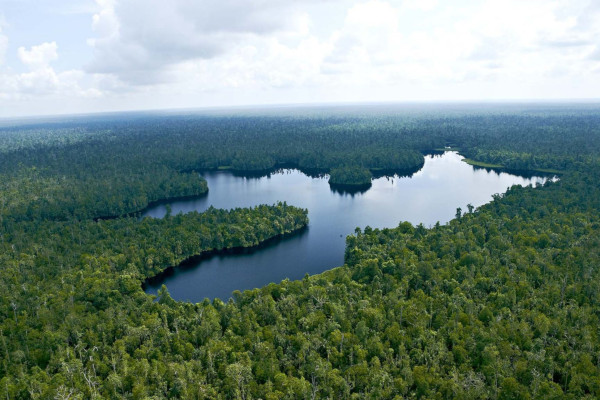


Climate and Ecosystem Protection
Sateri integrates climate and ecological issues into strategic planning and core management, focusing on resource efficiency, lifecycle emission reductions, and green supply chain collaboration to establish quantifiable action pathways.Our Commitments:
- By 2030, with 2023 as the base year, reduce Scope 1 and 2 GHG emissions intensity by 30%
- Sateri commits to achieving net-zero GHG emissions by 2050
- By 2030, support the conservation, restoration, and regeneration of terrestrial and freshwater ecosystems within operations and supply chain:
- Expand protected areas within the Poyang Lake freshwater and wetland ecosystem by more than 4,000 hectares
- Conduct biodiversity education and public engagement programmes benefiting at least 1 million people
- Use 100% PEFC™ or FSC® certified wood pulp raw materials
... more
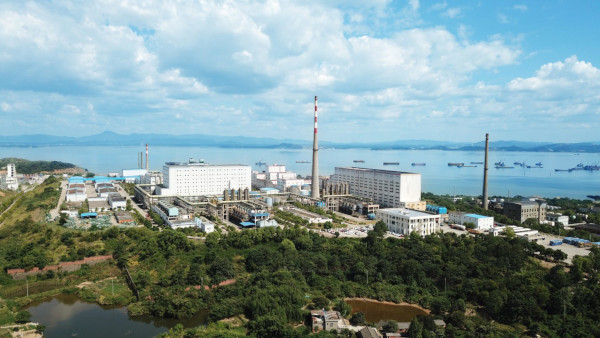
Closed Loop Production
Sateri upholds the philosophy of “closed-loop production”, committed to leading the regenerated cellulose fibre industry in delivering a net-positive impact. By strengthening environmental management systems, systematically reducing energy consumption and pollutant emissions, and improving resource efficiency, we build a replicable and verifiable green manufacturing model.Our Commitments:
All fibre mills shall establish a clean closed-loop production system and achieve:
- 2023: Passed EU-BAT standard audit
- 2023: Meet ZDHC MMCF Guidelines Progressive Level
- 2027: Achieve ZDHC MMCF Guidelines Aspirational Level
- 2025: Achieve total sulphur recovery rate exceeding 98%
- 2025: Achieve zero waste landfilling
- 2030: Further reduce water consumption intensity to a level below EU-BAT
... more





Innovation & Circularity
Sateri adheres to the concepts of innovation and circularity, committed to promoting green upgrades across the entire industry chain. We closely align with customer needs and continuously drive technological innovation to deliver high-performance, traceable, and environmentally friendly products, building a more resilient and responsible circular economy ecosystem.Our Commitments:
- By 2023: Products manufactured with up to 50% recycled material content from waste textiles
- By 2030: Increased to 100%
- By 2030: Under the premise of technical feasibility, sufficient market supply, and economic viability, increase the proportion of raw materials containing alternative or recycled materials to 20%
... more
Inclusive Growth
Sateri regards sustainable development as a long-term proposition for the joint evolution of enterprises and society. We build an inclusive development framework covering governance, talent, organizational structure, and social impact, committed to transforming corporate growth momentum into sustained empowerment for employee growth, industrial synergy, and social well-being.Our Commitments:
- Achieve 0 accidents and 0 occupational diseases by 2030 and in the long term thereafter
- By 2025 and beyond, lost time injury (LTI) rate reduced to below 0.1 per 200,000 work hours
- By 2030, proportion of women in management positions increased to at least 20%
- By 2025 and beyond, ensure 100% of employees at assistant manager level and above have customized career development plans
- By 2030 and beyond, uphold human rights and labor rights of all, and ensure suppliers do the same, including acknowledging the rights of indigenous people and communities to give or withhold Free, Prior and Informed Consent (FPIC)
- By 2030, support more than 300,000 local families/smallholder farmers to develop needed skills for sustainable livelihoods
- By 2030, continue advancing the Children’s Education Support Programme across all operating regions, with the goal of reaching over 100,000 children.
... more




President's Message
Sateri has come a long way since 2002 when we established our presence in China. We were China’s first wholly foreign-owned cellulose enterprise, responding to the country’s opening up to foreign investments when it joined the World Trade Organisation the year before.From our first viscose mill in Jiangxi, we have grown to five viscose mills with over 1.5 million tonnes annual capacity to become the world’s largest viscose producer within two decades. Along the way, we added yarn and more recently, lyocell, recycled fibre and non-woven fabrics to our product portfolio.
As we enter a new decade, we will continue to grow and diversify our product offerings to our customers, and remain a vital raw material supplier. But our growth strategy cannot be based on just volume and scale. We want to be a value and purpose-driven company, and there are compelling reasons for us to do so.
Climate Change and Our Industry
In the recent decades, the global community and our industry are confronted with the increasing reality of climate change and its devastating impacts. The apparel industry is a large emitter of greenhouse gas and produces 20% of the world’s waste water. 73% of the world’s clothing end up in landfill or incinerator. The COVID-19 pandemic has further shown us how the most vulnerable and lowest paid communities in the fashion supply chain can be affected.Faced with this reality, there is a rallying call for the industry to address environmental pollution and social challenges. The industry now looks to be more regenerative and redistributive, reducing its footprint and impacts to air, land and ocean.
Our New Growth Model
As a raw material supplier, Sateri needs to and will do our part to respond to the urgency of decoupling growth from further resource impact. This is something that will underpin our growth in addition to QPC (Quality, Productivity, Cost) and continuous improvement which are well-embedded in the company.Sateri’s sustainability efforts today focus on policies, certifications, engagement and transparency. We published our first sustainability report in 2017. We have attained all major international certifications; going beyond national standards and compliance. We adopted a set of 2020 goals in 2017, of which we have achieved the majority. For goals that we fell short of, we will accelerate our efforts to achieve them.
As 2020 draws to a close, we are charting the next course of goals and actions.
Sateri 2030 Vision: Our Decade of Change and Action
I am pleased to announce today the adoption of the Sateri 2030 Vision and its accompanying roadmap and targets. The Vision articulates how we aspire to grow in a way that we put back more into the environment and society than we take. The goals we set cover all dimensions of sustainability - social, economic, and environment - and are measurable and time-bound.The vision and goals are borne from months of robust internal discussions, benchmarking of industry best practices, and stakeholder consultations. The formulation of Sateri 2030 Vision is also informed by the results of our UNSDG (United Nations Sustainable Development Goals) prioritisation exercise which analysed and reviewed Sateri’s current social and economic contributions to our areas of operations in China.
The road to realising Sateri 2030 Vision will be paved with challenges, including decarbonisation through cleaner energy sources. But the impacts will be deep and meaningful. We will hold ourselves accountable by communicating our progress through our annual sustainability report and online sustainability dashboard.
I firmly believe that Sateri 2030 Vision will bring us closer to our customers, employees and communities, and make us more resilient as a business. We have the will, the resources and the business case; I am confident we will achieve the goals we have set and even go far beyond.
Sustainability will underpin our growth in the coming decade – there’s no two ways about it. Our customers and stakeholders ask for it, but more than that, we demand so for ourselves and for our future generations.
... more
Roadmap & Targets

2020
- Source responsibly in line with Sateri’s pulp sourcing policy
- Support science-based conservation and restoration of natural ecosystems in landscapes where Sateri and our supply chain operate
- Identify renewable energy sources for adoption
- Source certified /controlled wood pulp
- Further reduce Water Intensity beyond EU-BAT level
- Significantly increase Wastewater Recycling Rate
- Aspire to reach Zero Incidents and Zero Occupational Disease in our operations
- Increase female ratio in management positions
2023
- All viscose mills will meet EU-BAT limits
- All viscose mills will meet ZDHC MMCF Progressive Level
- Utilize textile waste and produce viscose products with 50% recycled content
2025
- All viscose mills will achieve 98% Sulphur recovery rate
- All viscose mills will achieve zero waste to landfill
- 20% of the feedstock will contain alternative or recycled materials
- Reduce Lost Time Incidence Rate to 0.1 per 200,000 man hours
2027
- All viscose mills will achieve ZDHC-MMCF Aspirational Level
2030
- Reduce GHG emissions in Scope 1, 2 and 3 by 30%
- Utilize textile waste and produce viscose products with 100% recycled content
- Support > 300,000 local families & smallholder farmers
- Ensure all left behind and disadvantaged children in our local communities receive quality pre-primary education
- Increase female ratio in management positions or above through 2030